
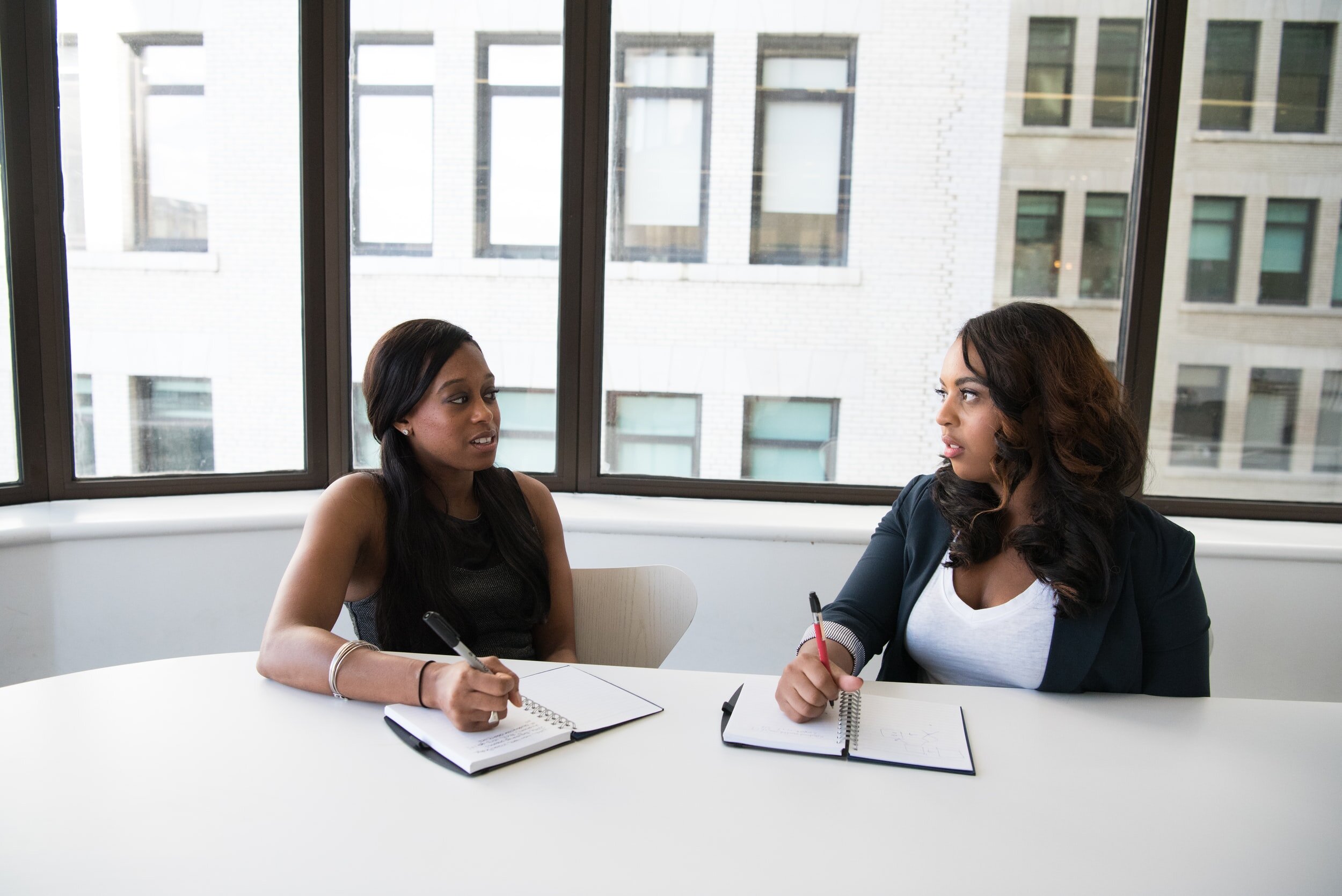
Feeling stressed about your next job interview? The key to success may be positive body language techniques. Studies show that body language is key to impressing recruiters and hiring managers.
“In a recent study, 38% of hiring managers said they would deny an applicant due to overall confidence, lack of smile and quality of voice.”
-Business2Community (25 Facts About Recruitment)
In other words, the way that you present yourself in an interview is crucial to overall success. Body language accounts for almost 55% of overall communication.
In 2021, the job market is becoming increasingly more competitive. Practicing confident body language techniques will help you stand out from other job applicants.
Here are 5 body language tips to ace your next interview!
1. Eye Contact
Eye contact is extremely important when making a great first impression. This is an essential tip when it comes to body language techniques.
Maintaining the right amount of eye contact in an interview can make a huge difference when developing trust with an interviewer. Think of your eyes as a window to your true intentions. An employer wants to know that you are serious about a position.
While maintaining some level of eye contact is extremely important, remember that near constant eye contact can cause issues. This can sometimes be felt as rude, condescending, or make an interviewer uncomfortable. Here are some reasons why eye contact is essential.
Importance of Great Eye Contact
-
Showcases Interest – We naturally increase eye contact when speaking with people we are interested in. Being attentive with your eyes show that you are engaged with what your employer is talking about. This is an excellent non-verbal way of expressing that you really care about what is being presented.
-
Increases Likability – Giving the right amount of eye contact makes a candidate appear appealing and appreciative of the employer’s time.
-
Develops Trust- is proven to show trustworthiness, especially in a professional setting.
After reading this list, you may be wondering how to correctly gauge eye contact during an interview. The true answer is to remain relaxed and let your confidence take over.
Be sure to check in from time to time and refocus on the interviewer, but focus mainly on staying relaxed and focus. Feel free to let your eyes wander occasionally.
2. Overall Confidence
Along with eye contact, overall confidence levels will impact every aspect of body language. Confidence will particularly impact an interview at the very beginning. First impressions are crucial in any professional setting, and they can certainly make or break a job interview.
55% of first impressions are made through visual communication, otherwise known as body language.
– U.S. Chamber of Commerce Foundation (What Makes a First Impression)
Around half of a first impression is derived completely from body language. Ensuring that you exude professional confidence is a great way to ensure you make a positive first impression. If you are wondering how exactly to achieve this confidence, here’s a list to get you started.
First Impression Confidence Tips
-
Stride- Before even sitting down for an interview, make sure to bring a confident presence with your walking technique. Stand up straight and walk with purpose.
-
Voice- Make sure to speak clearly and understandably. Take your time and don’t be afraid to breathe, use your hands, and reference visual aids.
-
Posture- When taking a seat, practice the same technique used for creating a great stride. Stand up straight and present yourself attentively.
-
Preparation- Preparing some talking points and learning about a business will always increase confidence. Practicing beforehand will certainly lead to a better first impression.
First impressions can be a bit daunting, but remember that confidence is your best friend in this situation. Remember that practice makes perfect. If you have time to prepare and do your research, confidence will be easy to achieve.
Once you are confident in your abilities, nothing can stop you!
3. Gestures
Now that you have mastered confidence and eye contact, the next most important body language technique involves gestures. This is one of the easiest but most important techniques to practice.
Learning how to gesture properly will help successfully execute your answers, and will make a lasting impression on prospective employers. In 2021, gestures are particularly important, given that you may be expected to have an interview with a mask on.
Here are a few gesture tips that can help you ace an interview.
Interview Gesture Tips
-
Open Palms- Make sure to show open palms and explain your thoughts with your hands in front. Open palms are seen as an open and honest gesture, and can help build trust with an interviewer.
-
Press Fingers Together- Press all of the fingers on both of your hands together to form a “church steeple”. This gesture denotes confidence and mastery of a given topic.
-
Listing- If you are trying to keep track of a list, feel free to use your hands as a presentation aid. This can also help to bring more emphasis to any set of data.
-
Intensity- Remember to be strong but not forceful with your hand gestures. Confidence is great, but being too intense may cause an interviewer to dislike you.
Remember that all gestures should be natural and lend themselves to any specific topic you are presenting.
Feel free to practice these gestures when talking with friends and family. This will help you practice before an actual interview.
4. Active Listening
While confidence and non-verbal communication are both extremely important, sometimes how you listen may be more important than what you say. When it comes to listening, there are two different types: active and passive.
Passive listening is best defined as background noise. If you listen to music while at work, this is a great example of passive listening.
Active listening is defined as taking a specific interest into what someone is saying. If you are actively listening, you will show other body language cues to let someone know that you are paying attention.
Active listening is crucial during an interview process. A hiring manager or recruiter will want to see some sign that you are interested in the position that they are speaking about. Here are some easy ways to practice active listening in a professional setting.
Active Listening Quick Tips
-
Nod Your Head- With many of us wearing masks for in-person interviews still, nodding your head is a great way to let someone know you are listening.
-
Verbal Affirmations- After a person finishes a thought, offering simple confirmations of “yes” or “understood” is another great way to practice active listening. This can also allow you to engage in the conversation easily as well.
-
Take Time to Respond- Remember that taking time to consider what someone says is actually a great practice. You may feel pressured to answer quickly, but do your best to resist it. Show that you are actually thinking and listening by taking time to respond.
Active listening can seem like a bit of an abstract concept, but it is very easy to put into practice. Hiring managers will enjoy knowing that you are actively engaged in a conversation. It will also speak well to your professional networking abilities.
5. Controlling Body Language
Our last tip is all about limiting body movement rather than adding anything else. In any professional interview, chances are you may be a bit nervous. When you are nervous, it can be easy to make unwanted movements.
Make sure to keep these items in check when you are interviewing.
-
Biting nails- Nail biting is one of the most common nervous habits, which should definitely be avoided during an interview. Doing so can hurt your personal branding, and may convey lack of confidence.
-
Fidgeting- Another common nervous habit is moving your hands too much. This can take the focus away from anything that you’re saying. If you are struggling with this, make a conscious effort to place your hands on your lap instead.
-
Checking Your Phone- During a job interview, remember that you’re on the interviewer’s clock, not yours. Keep your phone on silent and ignore it for the entire interview.
-
Forgetting to Smile- This is actually one of the most common body language mistakes. Make sure to smile and show that you’re excited about the position!
At the end of the day, an interviewer will expect you to be nervous in some capacity. We’re all human after all! However, do your best to stay confident an limit any unnecessary movement.
What do you think about these body language tips? Are there any that you think are particularly important during an interview? Let us know what you think in the comments below!
As always, PSI has jobs ready for great candidates like you! Feel free to apply in seconds by clicking below.


Leave a Reply